Why Is My Cat Squinting? What Eye Position Can Tell You
Your cat has a look for everything: an empty food bowl, a closed door, your decision to move them off the laptop. But when their eyes look narrower than usual, it can be harder to know what they’re telling you.
A cat may squint during a relaxed slow blink, but persistent squinting can signal eye irritation, injury, or pain. If your cat keeps one or both eyes partly closed while awake, especially with redness, discharge, or rubbing, contact your veterinarian promptly. This could point to a cause that requires medical intervention.
So, what could your cat’s squinting be telling you? Let’s take a closer look at the possible causes, how to tell a relaxed slow blink from signs of discomfort, and when to contact your vet.
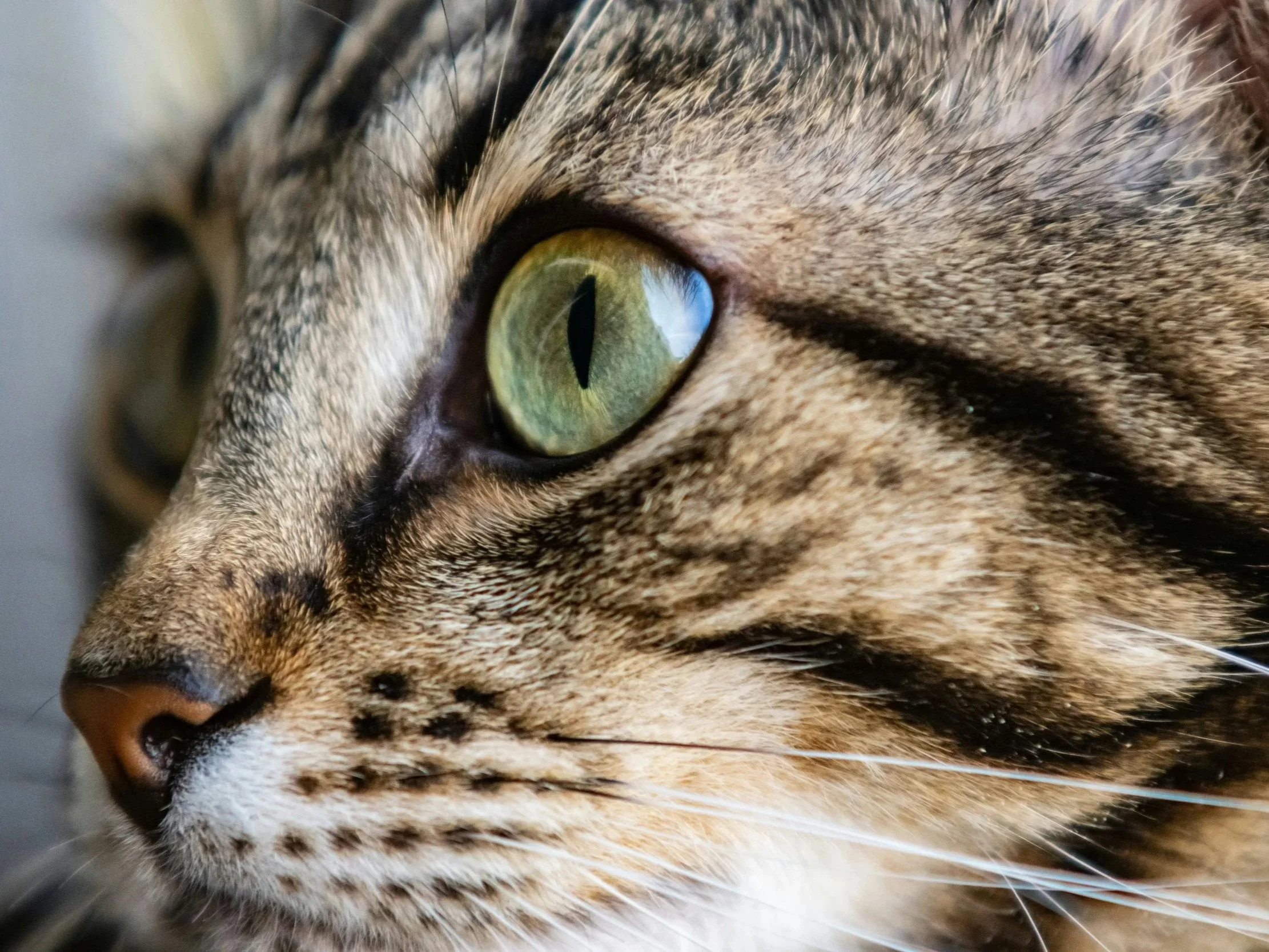
Is my cat squinting or slow blinking?
A slow blink usually involves gently narrowing or closing the eyes, then opening them again. Research suggests that slow blinking can be a form of positive communication between cats and people. Yes, that little blink from across the room may be part of your conversation.
Persistent squinting is different. Your cat may hold an eye partly shut, repeatedly blink, or seem reluctant to open it. This is particularly concerning when it is new or accompanied by other eye changes.
Ask yourself: does this happen briefly during a relaxed interaction, or does my cat keep doing it while awake? Don’t assume a new, ongoing squint is simply a sign of affection.
Common reasons a cat may squint
If your cat keeps squinting outside of those relaxed, slow-blink moments, you may be wondering what’s behind it. Several conditions can cause a similar expression, which is why it helps to notice what else has changed.
Eye irritation or conjunctivitis
If the squinting comes with redness, watering, or discharge, one possibility is conjunctivitis. You may know it as “pink eye” - inflammation of the tissue lining the eyelids and covering part of the eye.
Along with squinting, you might notice your cat blinking more often or see swelling around one or both eyes. Infections, including feline herpesvirus, are common causes in cats, although environmental irritants can also play a role.
Because different eye problems can look alike, it’s best to have your veterinarian examine the eye rather than assume it’s a simple irritation. They can identify the cause and recommend the right treatment.
A scratch or corneal ulcer
Sometimes, squinting is your cat’s way of protecting a painful eye. A scratch or ulcer on the cornea, the clear surface at the front of the eye, can make opening it uncomfortable. You might also notice extra tearing, rubbing, or sensitivity to light.
The tricky part is that you won’t always be able to see the injury yourself. Even an eye that looks fairly normal can have damage that needs treatment. Your veterinarian may use a special dye called fluorescein to help reveal it.
If your cat is holding an eye closed or seems uncomfortable, contact your vet promptly. Corneal ulcers can become serious, and an examination can help catch a problem before it worsens.
Other eye conditions
Squinting can sometimes be linked to a problem deeper inside the eye. Glaucoma, for example, involves increased pressure within the eye and can affect your cat’s vision. You might notice cloudiness, a change in the pupil, or an eye that looks larger than usual.
That doesn’t mean every squint points to glaucoma. It means eye changes deserve attention, even when you’re unsure what they mean. You don’t need to arrive at the appointment with a diagnosis - describing what looks different gives your veterinarian a useful place to start.
Pain beyond the eye
There’s another reason to look beyond the eye itself: narrowed eyes can be part of a facial expression associated with pain elsewhere in the body.
Researchers call this orbital tightening, which simply means the eyelids draw closer together and the eyes look partly closed. It’s one of the features assessed by the Feline Grimace Scale, a validated tool for evaluating acute pain in cats.
The scale also considers the ears, muzzle, whiskers, and head position. Together, those features offer more information than eye position alone. So while narrowed eyes can be a clue, they can’t tell you by themselves whether your cat is in pain or what might be causing it.
Why is my cat squinting one eye?
When one eye looks normal and the other is partly closed, it can be tempting to think your cat is just giving you a little wink. But if that expression stays around, it’s worth taking seriously. Conjunctivitis and corneal injuries can affect just one eye.
Without touching the eyes, take a look at the difference between them. Does the squinting eye look redder or wetter? Is there discharge or cloudiness? Is your cat blinking repeatedly or keeping it tightly shut?
Make a note of what you notice and contact your veterinarian, especially if the squinting is new or persistent. Those observations can help your vet understand what’s happening, even if the other eye looks completely normal.
When should I call the vet about cat squinting?
Contact your veterinarian the same day for new, persistent squinting while your cat is awake, particularly if you also notice:
Redness, swelling, or discharge
Repeated pawing or rubbing at the eye
An eye held tightly closed
Cloudiness or sensitivity to light
Seek urgent veterinary care for a suspected eye injury, sudden vision changes, or marked changes in the eye’s appearance. Eye disease can damage vision, and waiting to see whether it resolves can delay needed treatment.
Until you receive advice, do not put any human eye drops or leftover pet medication in the eye. Some medications, particularly steroid eye drops, can worsen certain corneal problems.
What to observe before the appointment
If you can do so without delaying care or upsetting your cat, take a short video or photo and note:
When you first noticed the squinting
Whether one or both eyes are affected
Whether it comes and goes or stays present
Any discharge, redness, rubbing, or visible changes
Changes in eating, activity, grooming, or usual behavior
You don’t need a perfect record. Even “she started holding her left eye shut this morning” gives your vet useful context.
How Sylvester can help you track your cat’s comfort
Your cat’s face can offer clues about how they feel, but interpreting those clues isn’t always easy. Sylvester’s Comfort Check uses a photo of your cat’s face, computer vision, and recognized feline pain science to provide comfort insights. Regular checks can help you track changes over time alongside your own observations.
Try making Comfort Checks part of a quiet moment you already share with your cat, when they’re awake and relaxed. Along the way, jot down anything you notice about their usual routine - whether they’re eating as eagerly, visiting their favorite perch, or spending more time tucked away. Looking at those observations alongside their Comfort Check results can help you build a clearer picture to share with your vet. Download the app now to give it a try!
Sylvester does not diagnose eye disease or replace a veterinary examination. If your cat is squinting or has other concerning eye signs, contact your veterinarian regardless of the Comfort Check result.
-
A gentle slow blink may be part of positive communication. Persistent squinting, especially with redness, discharge, or rubbing, should not be interpreted as happiness.
-
Yes. Discharge is only one possible sign. Squinting, cloudiness, pupil changes, or apparent vision problems can also warrant veterinary attention.
-
No. Sylvester can support comfort tracking through facial cues, but a veterinarian needs to examine your cat to determine why they are squinting.
Get to know the face you love
Knowing what’s usual for your cat makes it easier to notice when something changes. Everyday observations and Sylvester Comfort Checks can help you keep track of their comfort, while your veterinarian investigates concerns. Explore Sylvester and make comfort checks part of your cat-care routine. But, if your cat is squinting now, make contacting your vet the first step.