When choosing a vet clinic for your cat, look for a team with feline experience (along with protocols for nervous cats), gentle handling, a calm environment, clear pricing, and good communication. The clinic should offer the care your cat needs, take your concerns seriously, and explain where to turn for urgent or specialist support.
Finding that fit can take a little research, especially if your cat finds vet visits stressful or has specific medical needs. A clinic’s website and reviews can help you build a shortlist, but knowing what to ask - and what to notice - will give you a clearer picture.
This guide walks you through the details that matter, from how the team handles nervous cats to what happens when you need help after hours, so you can choose a clinic with confidence.

What are the most important things to look for in a cat’s vet clinic?
The most important things are feline experience, respectful handling, good communication, appropriate medical services, and access to care when you need it. Practical details, including travel time and costs, also matter because they affect how easily you can keep up with your cat’s care.
Use this quick checklist when comparing clinics:
Cat experience: The team regularly treats cats and welcomes questions about feline health and behavior.
A thoughtful environment: There is a plan to limit exposure to barking dogs, noise, and crowded waiting areas.
Gentle handling: Staff adapt their approach when a cat becomes frightened, and has protocols in place for anxious cats such as medication, sedation, and fear-free techniques.
Clear communication: You understand the recommendations, costs, and next steps.
Suitable services: The clinic can provide your cat’s routine care and arrange additional help when needed.
Reliable access: You know how to book, ask follow-up questions, and get help after hours.
A workable fit: The location, opening hours, and payment policies suit your circumstances.
How can you tell whether a veterinarian has experience with cats?
Ask how often the veterinary team treats cats, whether the team undertakes feline-focused training, and who they recommend for your cat’s particular needs. Look for interest in your cat’s behavior, home life, and medical history as well as their physical health.
You might ask:
“Which veterinarian would you recommend for a nervous cat?”
“Do you regularly care for senior cats or cats with my cat’s condition?”
“What feline training has your team completed?”
The Feline Veterinary Medical Association recommends looking for a veterinarian who understands cats and makes time to discuss topics such as nutrition and behavior, alongside routine medical care. A useful answer should explain how the team works. “We book extra time for nervous cats and discuss a visit plan beforehand” tells you more than “We see lots of cats.”
What do Cat Friendly Practice and Cat Friendly Clinic credentials mean?
Cat Friendly Practice® and Cat Friendly Clinic are formal programs that recognize clinics meeting specific feline-care criteria. They can help you identify practices that have taken structured steps to improve the veterinary experience for cats.
Depending on where you live, you may see the FelineVMA’s Cat Friendly Practice® designation or International Cat Care’s Cat Friendly Clinic accreditation. You may also see individual training certificates. Ask whether a credential applies to the entire clinic or to particular team members; these are different things.
Credentials are a helpful starting point, but you should still ask how the clinic will accommodate your individual cat, especially if they have had difficult visits before.
What should a cat-friendly clinic environment look like?
A cat-friendly environment should reduce avoidable noise, exposure to unfamiliar animals, and stressful handling. Helpful features include a separate waiting space, somewhere raised to place carriers, or the option to go directly into an examination room.
Ask whether the clinic offers:
A waiting area away from dogs or visual barriers between species.
Quieter appointment times.
A way to wait outside until a room is ready.
Clean, comfortable surfaces and towels in examination rooms.
Separate or appropriately screened accommodation for hospitalized cats.
A small clinic may have thoughtful solutions without a dedicated cat waiting room. Ask, “What happens when a frightened cat arrives and the waiting area is busy?”
Also notice the basics: visible cleanliness, secure doors, and staff who keep carriers safely closed while discussing your visit.

How should a veterinary team handle a nervous cat?
A veterinary team should recognize fear, use gentle handling, and adjust the examination to the cat’s response. Cat-friendly handling guidance emphasizes reducing distress and adapting interactions to the individual patient.
That might mean giving your cat time to settle, examining them in the removable bottom of their carrier, using a towel for comfort, or taking a break. This also means the team knows when to walk away, and discuss a better plan for the future. Some cats cannot be examined without sedation, and that’s okay. A clinic should be able to recognize that and regroup.
Ask: “What do you do if my cat becomes too frightened to continue?”
The answer should include a plan beyond holding them more firmly. For some cats, the veterinarian may recommend prescribed medication before a visit or sedation for a procedure. Ask how they decide what is appropriate and how they explain it to you.
Though you can’t always avoid stress for your cat if they don’t like going to the vet, your veterinary team should be dedicated to redusing fear as much as possible.
What medical services should a vet clinic offer for cats?
A primary-care clinic should provide routine examinations, preventive care, assessment of illness, and ongoing management of common conditions. It should also explain which tests and procedures it provides itself and when it refers patients elsewhere.
Ask about:
Vaccination and parasite-prevention planning.
Nutrition, weight, and behavior discussions.
Blood and urine testing.
Dental assessment and treatment.
Diagnostic imaging, such as X-rays or ultrasound.
Surgery, anesthesia monitoring, and pain management.
Senior care and long-term condition management.
Not every service needs to be available in the same building. What matters is understanding the pathway: who performs the work, where your cat goes, and who follows up.
What does good communication from a vet clinic look like?
Good communication means the team listens, explains recommendations in everyday language, and gives you clear next steps. You should leave knowing what was found, what remains uncertain, and what to do next.
Look for a team that:
Takes your observations seriously.
Explains what a recommended test could help determine.
Discusses reasonable options and their trade-offs.
Welcomes questions about treatment and cost.
Provides usable instructions for medication and home care.
Tells you when and how results will arrive.
A useful conversation should always explore a workable solution. You should also know whom to contact with follow-up questions, how quickly to expect a response, and whether a follow-up consultation carries a fee.
How can you compare veterinary costs without choosing on price alone?
Compare what each fee includes, request estimates for recommended care, and ask how the clinic handles changes to the treatment plan. The consultation price alone will not tell you what a visit or procedure will cost.
Before booking, ask about the examination fee, deposits, cancellation policies, and payment requirements.
For a proposed procedure, ask:
“Can I have an itemized estimate?”
“What is included, including medication and follow-up?”
“What could change the final cost?”
“Will you contact me before additional charges?”
“If my budget is limited, how would we prioritize care?”
Being open about your budget helps the team explain your options. You deserve a respectful conversation about what is feasible. Also, if you have pet insurance, ask what documents the clinic supplies and whether you pay the clinic first. Just be sure to confirm coverage and reimbursement rules with your insurer before relying on any reimbursements.
How important are location, appointment availability, and emergency support?
These details are important because your clinic needs to be accessible for planned visits and unexpected concerns. Ask about routine appointment waits, urgent appointments, opening hours, and what happens when the clinic is closed.
Find out:
Is the clinic accepting new feline patients?
How far ahead do routine appointments book?
How are concerns assessed when no appointments are available?
Can you usually request the same veterinarian?
Which emergency hospital should you use after hours?
How are records shared with emergency or referral teams?
A regular clinic does not need to offer 24-hour care to be a good choice, but it should make the out-of-hours plan easy to understand.

Should you trust online reviews when choosing a vet?
Use online reviews to identify patterns and questions to ask, rather than as a complete measure of medical quality. Recent comments about communication, feline handling, billing explanations, and follow-up may help you decide what to investigate. However, it’s important to note that one difficult experience cannot tell you everything about a clinic. Neither can a five-star average.
Recommendations from other cat owners can be useful, especially if their cats have needs similar to yours. Ask what they actually value: a veterinarian who explains complicated results, a nurse who helps with medication, or a team that accommodates a very nervous cat. Then speak with the clinic yourself bases on any concerns.
What should you bring to your cat’s first appointment?
A little preparation can help you feel more confident and make the most of your cat’s appointment. Bring a current list of medications and supplements, details about their usual food, and any questions you’d like to ask. If you’re moving to a new clinic, ask your previous one to send over your cat’s medical records, including test results and treatment history.
It also helps to let the clinic know beforehand if your cat has found past visits stressful, has any medical conditions, or prefers to be handled in a certain way. This gives the team a chance to plan for their comfort.
Before the visit, jot down any changes you’ve noticed at home, such as differences in appetite, litter-box habits, grooming, movement, sleep, or how your cat interacts with you. Photos or videos can be useful, especially if you’re trying to explain something your cat is unlikely to do during the appointment.
Finally, check with the clinic about any preparation instructions. There’s no need to assume your cat should skip breakfast or miss a medication, so ask the team what’s appropriate for their visit.
If you need some more support on how to prepare for your cat’s next vet visit, check out our blog on How To Take Your Cat To The Vet: What To Expect & How To Prepare.
How can Sylvester help you communicate with your cat’s vet?
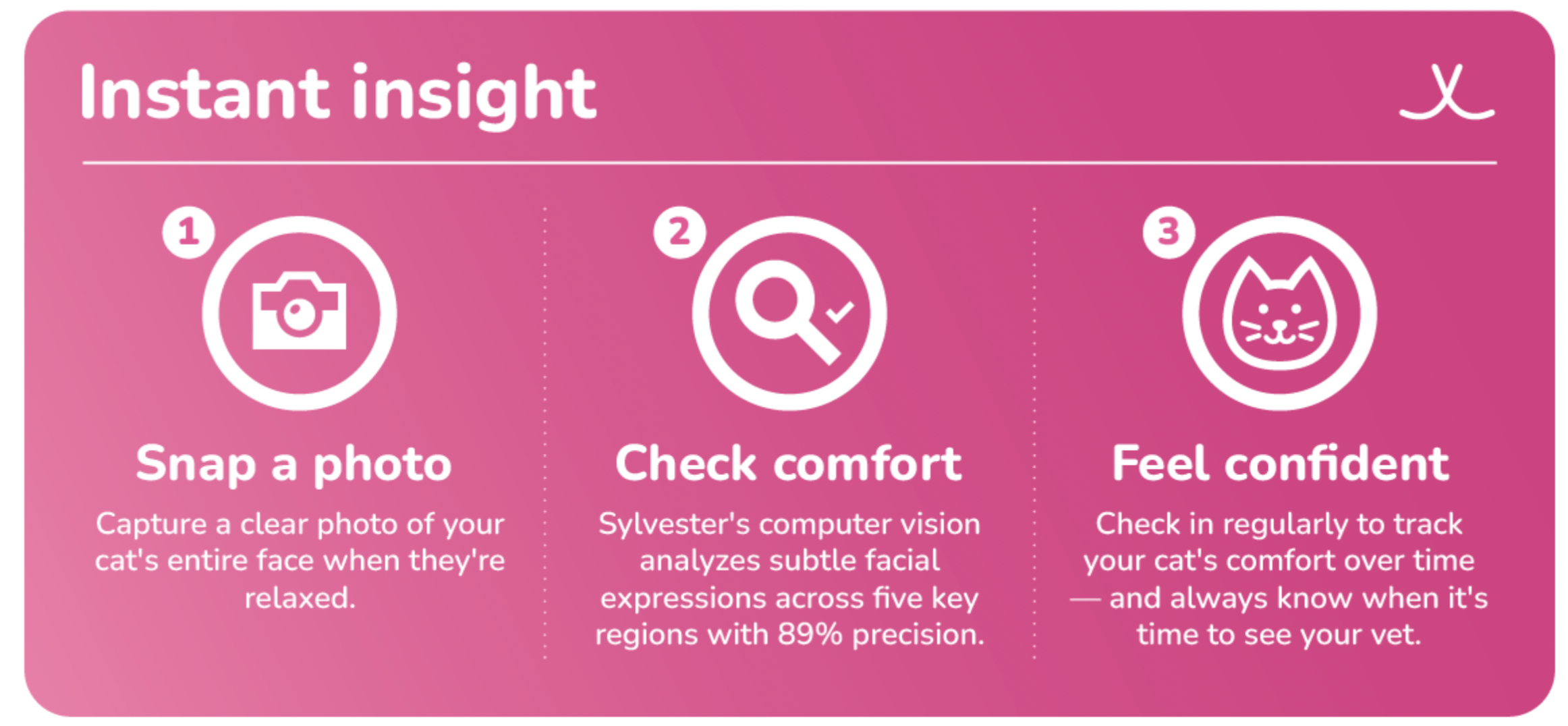
Getting a clear picture of how your cat feels at home can make it easier to talk through concerns with your veterinarian. Sylvester’s Cat Comfort Checks use a photo to assess facial cues associated with comfort, and let you follow your cat’s comfort history over time.
Together with your notes about daily habits, these results can help you show your vet what you’ve noticed and explain why you’re concerned. Before your appointment, ask the clinic how best to share photos, videos, and Comfort Check results.
Just be aware that your veterinarian is still the person to turn to for answers about your cat’s health. Sylvester offers additional observations to support that conversation, but it cannot diagnose a condition or replace an examination. Even a comfortable result doesn’t rule out illness, so always contact your vet if something doesn’t seem right.
Download the Sylvester app today and run your cat’s first comfort check!
What questions should you ask before booking a new vet?
These questions can give you a useful picture before you commit:
Who would you recommend for my cat’s needs?
How do you accommodate frightened cats?
Can we wait away from dogs?
What does a first appointment cost and include?
Which services require referral?
How do I receive results and ask questions?
What happens outside opening hours?
Can my cat usually see the same vet?
How do you know you have found the right vet clinic?
The right clinic is one where you feel heard, understand your cat’s care plan, and feel comfortable asking questions. Your cat may still find visits stressful, but knowing the team takes their comfort seriously can help you feel more at ease, too.
Over time, those visits can grow into a trusting relationship with people who know your cat, explain their recommendations clearly, and work with you when decisions get difficult. You don’t need to figure everything out at the first appointment, but feeling supported and confident about the next steps is a good place to start.