Cat Wellness: Everyday Ways to Help Your Cat Feel Their Best
Your cat has a lot on their daily agenda. Inspect the grocery bags. Supervise your bathroom visit. Sleep in the spot you were about to sit in. Somewhere between all those important responsibilities, they’re relying on you to help them stay healthy and comfortable.
October is National Pet Wellness Month, making it a good time to check in on your cat’s care routine. Helping your cat stay healthy and comfortable starts with the care you offer every day: food that meets their nutritional needs, regular veterinary visits, opportunities to play, and a home where they feel safe. Love and attention matter, too, along with noticing changes in their usual habits. Your veterinary team can guide you on nutrition, preventive care, and supplements, while Sylvester’s Cat Comfort Checks offer another way to check in on their comfort at home..
You don’t have to overhaul everything at once. A few thoughtful habits, guided by your veterinary team and your cat’s individual needs, can give you a great place to start. Let’s dive into our tips on how to promote wellness in your beloved cat.

Make your veterinary team part of the routine
When your cat is eating, playing, and conducting their usual household surveillance, it’s easy to assume a veterinary visit can wait. But wellness visits are valuable even when nothing seems wrong.
An examination gives your veterinarian a chance to assess your cat’s weight, teeth, overall condition, and any changes that may be difficult to recognize at home. It’s also time to talk through questions about their food, behavior, mobility, and daily routine.
Cats should generally have a preventive care checkup at least once a year, with more frequent visits often recommended for seniors and cats with ongoing health conditions. Your veterinary team can help you decide on the right schedule and discuss vaccines, parasite prevention, and screening tests based on your cat’s age, health, and lifestyle. Indoor cats need an individualized preventive care plan, too.
Before the appointment, jot down anything you’ve noticed. “She doesn’t jump onto the bed as often” or “He’s been drinking more lately” can be useful observations, even if they seem small.
Get nutrition advice that fits your cat
The cat food aisle comes with plenty of opinions. Your cat probably has a few of their own. Rather than choosing food based on the latest trend, ask your veterinary team what makes sense for your cat’s life stage, health, and body condition. A growing kitten, a healthy adult, and a cat managing a medical condition may have different nutritional needs.
A complete and balanced diet appropriate for your cat is the foundation. Your team can help you understand food labels, choose between suitable options, and work out how much to feed. Package feeding guides are a starting point, but they may not match your individual cat’s energy needs. Bring the name of their food, the amount you offer, and an honest account of treats and extras to your next visit. Yes, the little “just because you’re cute” snacks count.
Keep fresh water available, too, and ask whether changes to your cat’s feeding routine could help support their hydration or weight goals. If a diet change is recommended, your veterinary team can guide you through a gradual transition.
Check with your vet before adding supplements
It’s tempting to see a supplement promising better joints, digestion, or a shinier coat and think, “Couldn’t hurt.” But whether a supplement is useful depends on your cat’s needs, the product, and what else they’re taking. Cats eating a complete and balanced diet generally don’t need extra vitamins and minerals, and adding them unnecessarily can create problems.
If you’re considering a supplement, bring the label to your veterinary team and ask:
What would this help with?
Is there evidence that it benefits cats with this concern?
Is it appropriate alongside my cat’s food and medications?
What dose should I use, and how will we know whether it’s helping?
This gives you a plan with a clear purpose, rather than another product in the cupboard.

Give their inner hunter something to do
Your cat may receive dinner in a ceramic bowl, but they still have instincts to stalk, chase, pounce, and explore. Making room for those behaviors is part of meeting their everyday needs. Try moving a wand toy like prey: let it disappear around a corner, pause behind a cushion, then dart back into view. Give your cat chances to catch it, and adjust the pace to their interest and ability.
Food puzzles and simple searching games can add variety to mealtimes. Start with an easy challenge using part of their usual food allowance so they can succeed without getting frustrated.
You don’t need a basket overflowing with toys. Rotating a few favorites, offering a cardboard box to investigate, or making time for a short play session can keep things interesting. Supervise toys with strings or small parts and put them away afterward.
Pay attention to what your cat enjoys. Some are enthusiastic chasers; others prefer a slow, strategic ambush from underneath the sofa.
Look at your home from your cat’s point of view
A home can be beautiful to us and still leave a cat searching for a quiet place to hide or a comfortable spot to scratch. Cats need access to safe resting places and essential resources, including food, water, litter boxes, scratching areas, and places to play. In homes with multiple cats, spreading those resources out helps each cat use them without having to navigate another cat’s territory.
Take a little tour of your home and consider:
Somewhere to retreat: A quiet room, covered bed, or familiar box where your cat can rest undisturbed.
A comfortable lookout: A sturdy perch or accessible window spot.
Places to scratch: Stable scratching surfaces in locations your cat actually uses.
Easy access to essentials: Clean litter boxes and food and water stations they can reach comfortably.
Your cat’s needs may change with age or illness. If they seem less willing to climb, jump, or reach a resource, bring it up with your veterinary team rather than assuming it’s simply part of getting older. Environmental adjustments can then be tailored to their comfort and abilities.
Make love and attention a daily habit
Some cats want to be practically attached to you. Others prefer to demonstrate their devotion from the opposite end of the couch. Both deserve connection on their own terms.
Offer gentle, predictable interactions and give your cat the choice to approach or leave. They might enjoy brushing, a few cheek scratches, interactive play, or simply sitting near you while you work. Watch their body language and pause when they’ve had enough. Respecting those preferences helps make your time together comfortable.
These moments also give you a chance to notice how they’re doing. You may become aware of a change in grooming, a new reluctance to be touched, or less interest in an activity they usually enjoy.
Include comfort in your everyday check-ins
You probably already know your cat’s favorite sleeping spot and exactly how they announce that breakfast is late. Getting familiar with their comfort is another useful part of that picture.
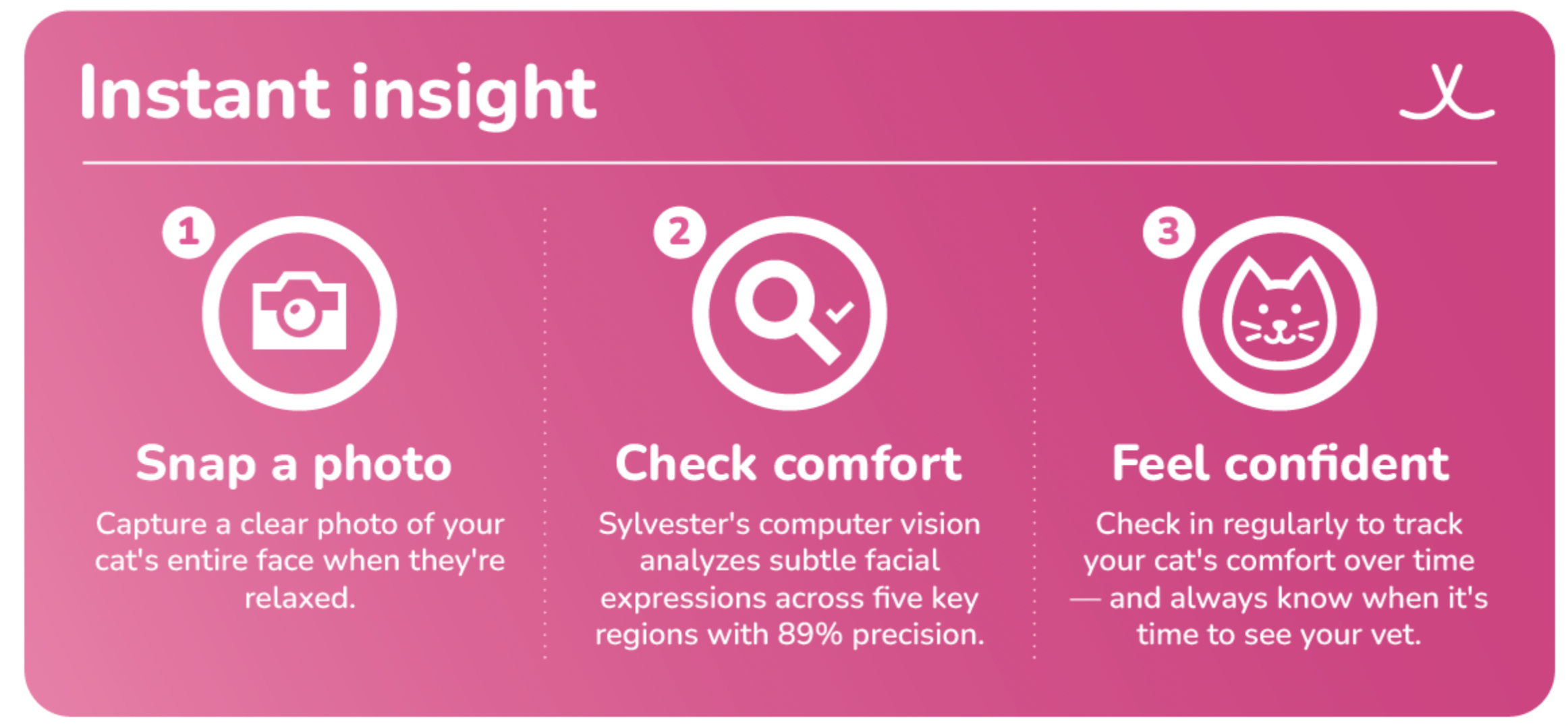
Sylvester’s Cat Comfort Check uses computer vision informed by recognized feline pain science to analyze subtle facial cues. It gives you another way to check in on your cat at home, and the app’s Comfort Check history lets you review results over time.
Choose a calm moment when your cat is awake, and follow the app’s guidance for a clear, well-lit view of their face. Alongside their results, keep notes about what you’re seeing: their appetite, litter box habits, grooming, movement, and interest in play. Those observations can help you explain your concerns to your veterinary team.
A Comfort Check is one part of your cat’s care routine. It doesn’t diagnose a condition or replace an examination, and a comfortable result shouldn’t override a change you’re noticing at home.
Download the app now to run your cat’s first comfort check!
Build a routine you can keep going
National Pet Wellness Month is a helpful reminder to give your cat’s care a little attention. Start with something manageable: book their next wellness visit, ask about their diet, refresh a resting spot, or make daily playtime part of your routine. Then keep showing up for those small moments. Fill the water bowl. Let them catch the toy. Give them space when they want it and company when they ask.
You don’t need to have every answer. Knowing your cat, noticing changes, and working with your veterinary team can help you make thoughtful decisions throughout their life.