How To Take Your Cat To The Vet: What To Expect & How To Prepare
Taking your cat to the vet can be stressful, and not just for your cat. Between getting them into the carrier, navigating the car ride, and wondering what will happen once you arrive, even a routine veterinary visit can feel overwhelming. And when your cat is already feeling unwell, there may be even more on your mind.
A little preparation can make the experience easier for both of you. Ranging from getting your cat comfortable with their carrier, knowing what questions to ask your veterinary team, and understanding your cat’s unique personality during stressful events - here’s how to prepare for your cat’s next vet visit.
Before Your Cat's Vet Visit
Preparing ahead of time can help you feel more organized while giving your cat a chance to become familiar with some of the things they'll encounter on appointment day.
1. Get Your Cat Comfortable With Their Carrier
If the carrier only comes out when it's time to visit the vet, your cat may quickly learn that carrier = something they don't particularly enjoy. Instead, try leaving the carrier out at home during times when you aren't going anywhere. Leave the door open and place treats, toys, or familiar bedding inside so your cat has opportunities to explore it on their own.
As Sylvester's Lead Animal Behaviorist, Dr. Frances Valentine, explains:
“Familiarizing your cat with the carrier goes a long way. Try putting their favorite treat in the carrier and leave the door open. As your cat goes in, give more treats in the carrier. Soon they will associate carriers with treats and good experiences. Sylvester tip—this works best before their normal feeding time.”
Starting this process well before you actually need the carrier can help make it a more familiar part of your cat's environment.
2. Take Short Practice Trips
The carrier isn't the only part of a vet visit that may be unfamiliar. For some cats, traveling in the car is a rare experience too.
Before your cat's next appointment, consider taking a few short practice trips. During and after the ride, offer treats as a positive reward. The goal is simply to give your cat some experience with traveling that isn't immediately followed by a veterinary appointment.
3. Comfort Check Your Cat Before You Go
Before leaving home, take a moment to check in on your cat's comfort.
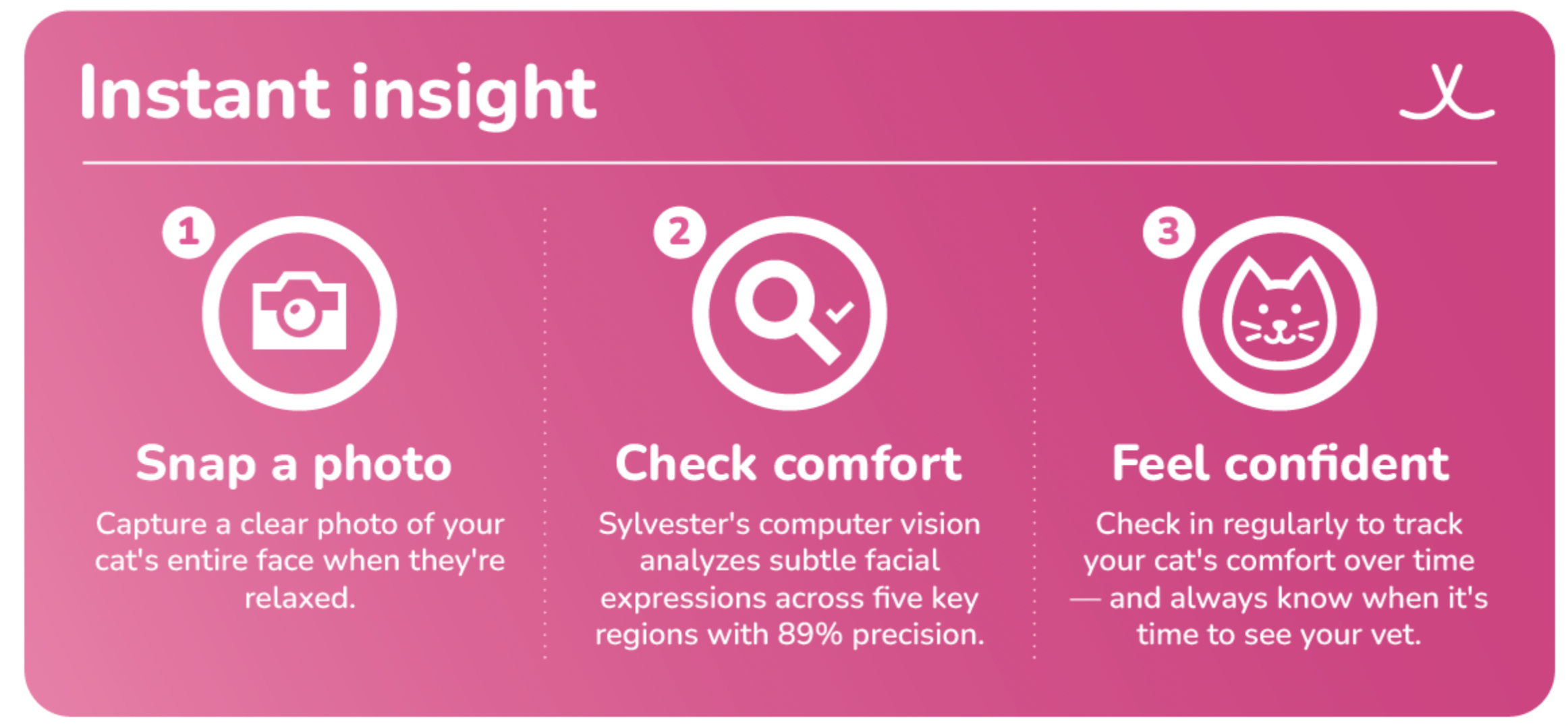
You can use Sylvester's Comfort Check to take a photo of your cat and establish a baseline before their appointment. Sylvester uses computer vision to assess your cat's facial features for signs associated with discomfort. Having a pre-visit Comfort Check can also give you another piece of information to consider alongside the behaviors and changes you've noticed at home.
4. Write Down What You've Noticed
Have you ever arrived at an appointment and suddenly forgotten half the things you wanted to mention? Before you go, you can make a quick list to prevent this.
Think about whether you've noticed changes in your cat's:
Appetite or drinking
Litter box habits
Activity or mobility
Grooming
Sleep
Social behavior
Vocalization
General routine or personality
It can also be helpful to note when the change started, how often it happens, and whether it seems to be getting better or worse.
Photos and videos from home can be useful, too. Your cat may not repeat a strange walk, unusual behavior, or other intermittent change once you're standing in the exam room.
What To Bring To Your Cat's Vet Appointment
You probably don't need to pack an entire suitcase, but bringing a few things can make the appointment easier.
Depending on the reason for the visit, consider bringing your notes, relevant photos or videos, a list of medications or supplements your cat receives, and any medical records the clinic doesn't already have.
You can also bring a familiar blanket or piece of bedding to help ease your cat’s nerves. A familiar scent from home may provide some comfort in an unfamiliar environment.
And of course, if your veterinary team has asked you to bring anything specific, such as a stool or urine sample, follow the instructions they provided.
What To Expect At Your Cat's Vet Appointment
Every appointment will look a little different depending on why your cat is there.
For a typical visit, a veterinary technician or other team member may start by asking about your cat's history and the reason for the appointment. They may also collect vitals and other helpful information from your cat, such as their weight, temperature, heart rate, respiratory rate, and more.
Your veterinarian will then perform a physical examination and discuss their findings with you each step of the way. Depending on your cat's age, health, symptoms, and reason for the visit, they may recommend additional testing, treatment, preventive care, or a follow-up.
This is also your opportunity to share what you see at home. Cats can behave very differently at the veterinary clinic than they do in their usual environment, so don't assume something isn't important just because your cat isn't doing it during the exam. This will also be the perfect time to share your list of questions, if you have any.
What Should You Ask Your Vet About Your Cat?
It's completely okay to ask questions during your cat's appointment. In fact, writing them down beforehand can help make sure you don't leave wishing you'd remembered something.
Some useful questions might include:
Is anything you found today concerning?
Are there changes I should watch for at home?
What is considered normal after today's visit or treatment?
Does my cat need any follow-up testing or another appointment?
Are there changes I can make at home to support their comfort?
If you're prescribing medication, how and when should I give it?
What should I do if I'm unable to give the medication?
When should my cat be seen again?
If your veterinarian recommends a test, medication, or procedure you don't understand, ask them to explain it. You don't need to leave the appointment confused about your cat's care plan.
How To Make Vet Visits Less Stressful For Your Cat
Some cats stroll into the veterinary clinic ready to make friends. Others would very much prefer to be anywhere else. Knowing your individual cat and communicating with your veterinary team can go a long way.
Tell The Veterinary Team About Your Cat
Let your veterinarian or veterinary technician know about your cat's personality and previous experiences at the vet. If you know your cat becomes particularly fearful or stressed during veterinary visits, mention it when making the appointment rather than waiting until you arrive.
Your veterinary team can discuss options that may help make future visits easier based on your cat's individual needs.
Look For Cat-Friendly Veterinary Care
You can also look for veterinary practices that have taken additional steps to make visits more comfortable for cats.
For example, Fear Free Certified veterinary professionals and practices receive education focused on preventing and reducing fear, anxiety, and stress during veterinary care.
Find a Fear Free veterinary practice.
After The Vet: Give Your Cat Time To Decompress
Once you're back home, your cat may be ready to return to their usual routine, or they may want some space.
To be safe, give them access to a quiet, familiar area where they can rest. Offer gentle attention if they seek it out, but allow them to settle back in at their own pace.
Every cat responds differently to veterinary visits, so pay attention to what's normal for your cat.
Check In On Your Cat's Comfort After The Visit
This is also a good time for another Comfort Check.
Using Sylvester before and after a veterinary visit can help you check in on your cat's comfort over time. Take another photo once you're home and compare it with your cat's pre-visit baseline and the recovery expectations provided by your veterinary team.
Remember, Sylvester isn't a replacement for veterinary care. It's another tool that can help you pay closer attention to changes in your cat and make more informed conversations with your veterinary team. If you notice concerning changes, unexpected discomfort, or anything that doesn't match the recovery guidance your veterinarian provided, contact your veterinary team.
A Little Preparation Can Go A Long Way
Taking your cat to the vet may never be their favorite activity, and that's okay. Making the carrier familiar, practicing travel ahead of time, bringing information from home, and knowing what you want to ask can help you arrive feeling more prepared.
Most importantly, remember that you know your cat's normal better than anyone else. Those little things you notice at home - how they move, eat, groom, sleep, play, and interact with you, can provide valuable context for your veterinary team. And between visits, tools like Sylvester can help you keep checking in on the cat behind the poker face.