Signs of Pain in Cats: Why Cats Hide Pain and How to Recognize It Early
If you've ever wondered whether your cat is hiding pain, you're not alone. Unlike people, cats rarely make it obvious when something is wrong. In fact, cats have evolved to mask signs of pain as a survival instinct. In the wild, showing weakness could make them vulnerable to predators or other threats.
That instinct hasn't disappeared simply because cats now live in our homes. Even when they're uncomfortable, many cats continue eating, greeting their caregivers, or following their normal routines. The signs are often subtle, making discomfort easy to miss until it becomes more advanced.
So how can you tell when your cat is trying to hide discomfort? Keep reading to learn why cats hide pain, the subtle signs to watch for, and how to recognize when something may not be right.
Why Do Cats Hide Pain?
Cats are both predators and prey animals. Throughout their evolution, hiding pain increased their chances of survival by preventing them from appearing vulnerable.
As a result, many cats naturally suppress obvious signs of discomfort. Rather than crying out or limping dramatically, they may simply change their posture, become less active, or behave a little differently than usual.
Because these changes can develop gradually, caregivers often don't realize anything has changed until they look back and notice a pattern.
Physical Signs of Pain in Cats
While every cat is different, there are several physical changes that may suggest your cat is uncomfortable.
Facial Expressions
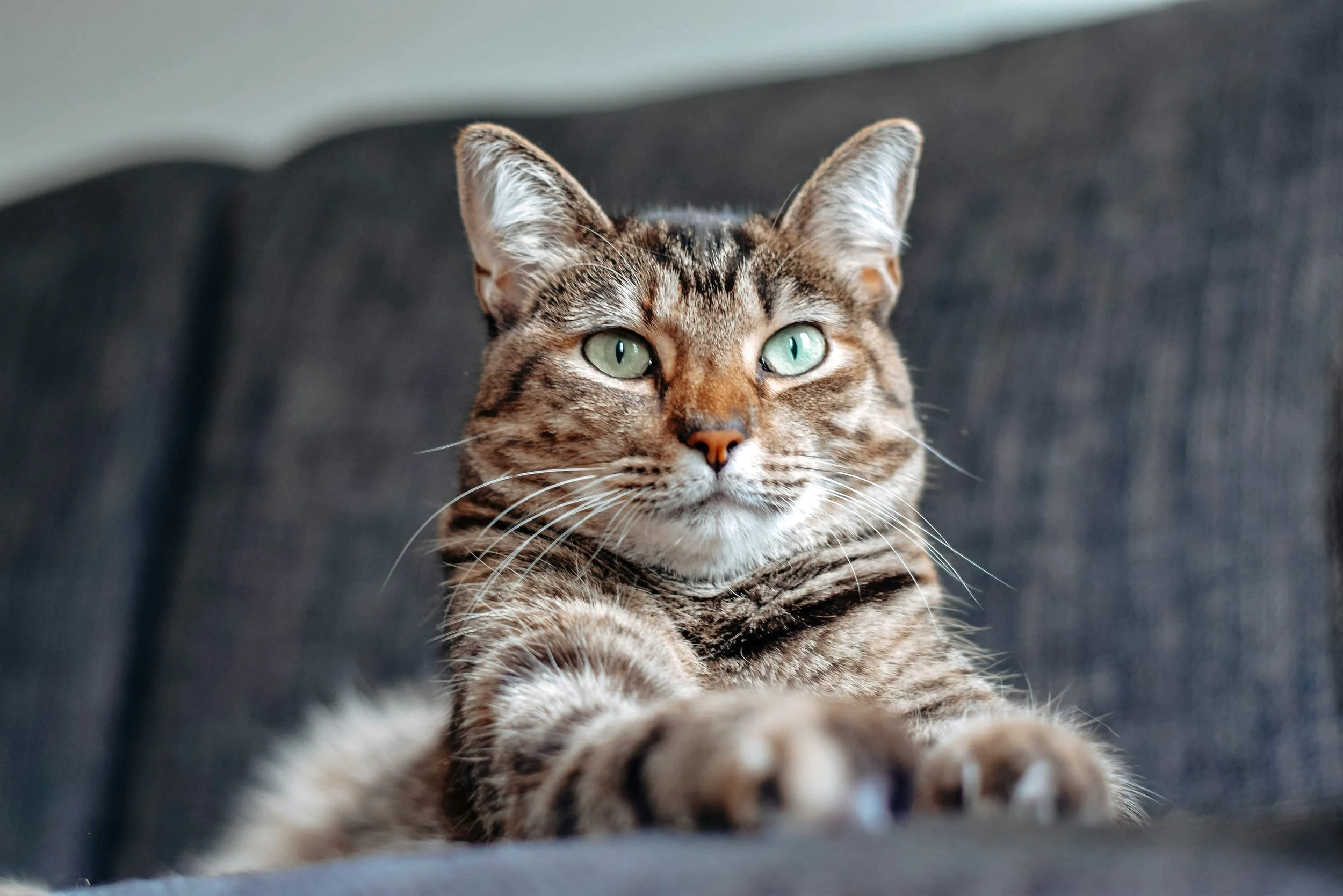
Your cat's face can provide important clues about how they're feeling. Cats experiencing discomfort may:
Squint their eyes
Lower their head
Hold their ears lower than usual
Tense their muzzle
Hold their whiskers stiff and straight
These subtle facial changes are one reason caregivers may not immediately recognize pain without looking closely.
Changes in Posture
A relaxed cat often stretches out comfortably on their side or back. Cats experiencing pain may instead:
Hunch or crouch
Walk more stiffly
Shift positions frequently before settling down
Have difficulty getting comfortable
Grooming Changes
Cats are known for meticulous grooming habits. Changes in coat condition may indicate they aren't feeling their best.
Watch for:
Excessive licking
Matted fur
Greasy-looking coat
Reduced grooming
Breathing Changes
Rapid or labored breathing should always be taken seriously. If you notice your cat breathing unusually fast or struggling to breathe, seek veterinary attention promptly.
Behavioral Signs of Pain in Cats
Changes in behavior are often one of the earliest indicators that something may be wrong. Because every cat has unique habits and routines, caregivers are often the first to notice when something feels "off."

Decreased Mobility
Cats are naturally agile and active. A cat experiencing discomfort may:
Jump less frequently
Hesitate before climbing
Move more slowly
Become less interested in play
Increased Irritability
Pain can affect mood. Cats that are normally affectionate may become more withdrawn or display increased aggression, including hissing, scratching, or biting.
Appetite Changes
Pay attention to any noticeable change in your cat's eating or drinking habits. Some cats may eat less, while others may eat more. The important thing is recognizing a change from what is normal for your individual cat.
Sleep Changes
Cats spend much of their day sleeping, but pain may alter those patterns. Some cats sleep significantly more, while others appear restless and sleep less than usual.
Litter Box Changes
Difficulty using the litter box, increased trips to the litter box, straining, or accidents outside the box can all signal that your cat may need veterinary attention.
Increased Vocalization
Your cat may communicate discomfort through:
Hissing
Crying
Howling
Growling
Noticing when these vocalizations occur can provide helpful information to share with your veterinary team.
Why Early Recognition Matters
Because cats are so good at hiding pain, it's easy to overlook the small changes that can signal something isn't quite right. A slightly different facial expression, less interest in play, or a new daily habit might not seem important on its own - but together, they can tell a story.
You don't need to spot one dramatic sign to know something has changed. In fact, many caregivers simply have a feeling that their cat isn't acting like themselves. Trusting those instincts, while keeping an eye on subtle changes over time, can help you recognize discomfort earlier and have more informed conversations with your veterinarian.
A New Way to Check In on Your Cat's Comfort
Because cats are so skilled at masking discomfort, subtle facial changes can sometimes go unnoticed. That’s why Sylvester was created.
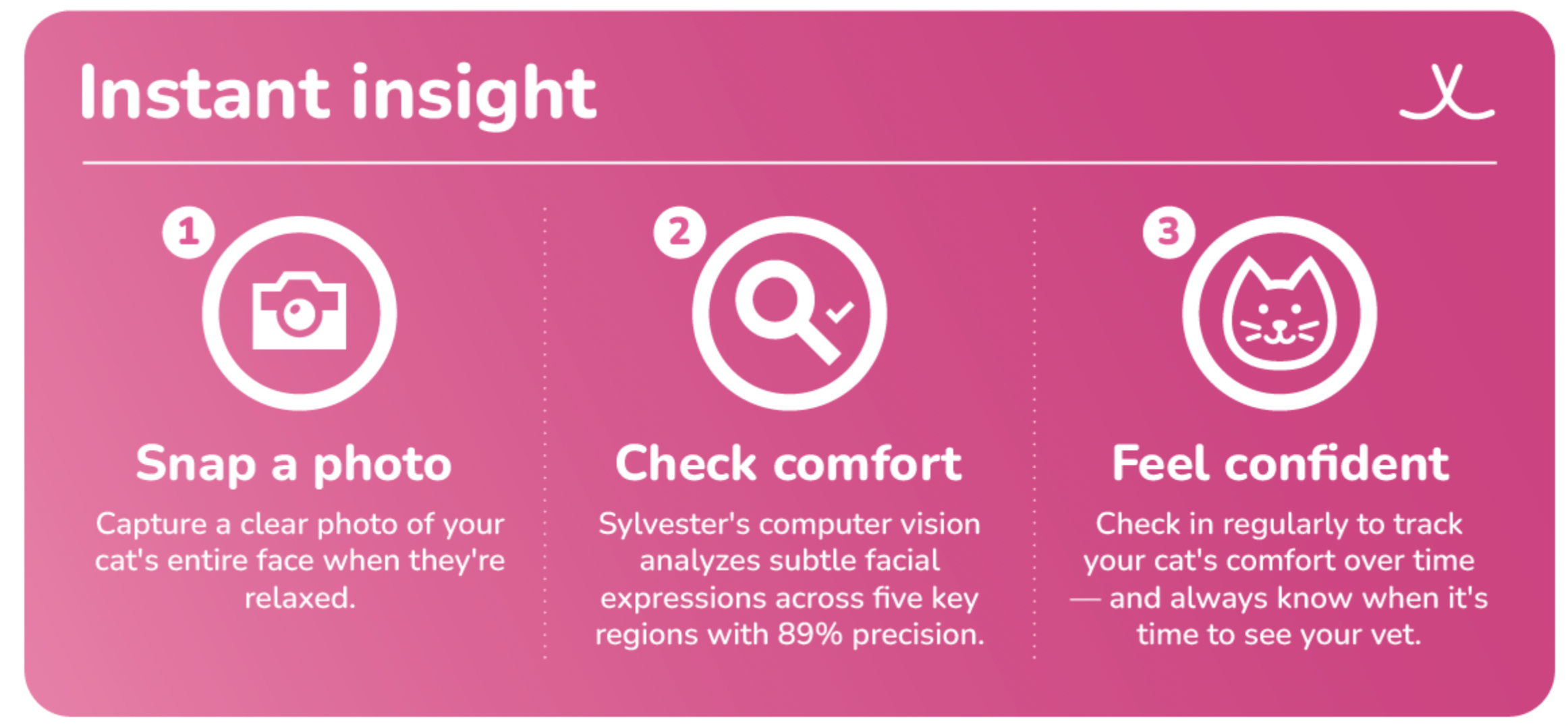
Sylvester is a mobile app designed specifically to help caregivers better understand how their cat may be feeling. Using computer vision and recognized feline pain science, the app analyzes your cat's facial expressions to provide objective comfort insights.
Unlike general AI tools, Sylvester was built exclusively for feline facial analysis. Its computer vision model evaluates five facial regions associated with recognized feline pain scoring methods:
Head position
Ears
Eyes
Whiskers
Muzzle
The model was trained using expert-annotated datasets containing thousands of real cats with various health conditions and compares facial features against validated veterinary pain scoring scales.
With Sylvester, you can:
Perform quick comfort checks from your phone
Check unlimited cats with an active subscription
Monitor comfort check history over time
Make comfort checks part of your regular care routine
As Dr. Frances Valentine, lead animal behaviorist behind Sylvester, explains:
"At Sylvester.ai we use facial cues to decode your cat's comfort level. Grounded in science, and with over 350,000 pictures assessed, our tool has demonstrated over 86% accuracy at identifying cat pain. This early detection tool can let caregivers know if their cat is in pain and can track the health of a cat over time. We see this as just the beginning of our work in providing effective and proactive pet healthcare for cats everywhere."
Recognizing pain in cats isn't always straightforward, and it's easy to forget what to look for in the moment. That's why we've also put together a free 10 Signs of Feline Pain guide you can keep on hand whenever you have concerns about your cat's comfort.
Combined with regular Comfort Checks in the Sylvester app, it can help you build a clearer picture of your cat's comfort over time and support more informed conversations with your veterinarian.
Understanding Your Cat Starts with Paying Attention
Cats can't tell us when they're uncomfortable, but they do give us clues. The more familiar you become with your cat's normal behaviors, routines, and expressions, the easier it becomes to notice when something has changed.
Whether you're keeping an eye on their mobility, grooming habits, facial expressions, or everyday routines, those small observations can make a big difference. And when you're ever unsure, having extra tools to help you check in on your cat's comfort can give you greater confidence and peace of mind.